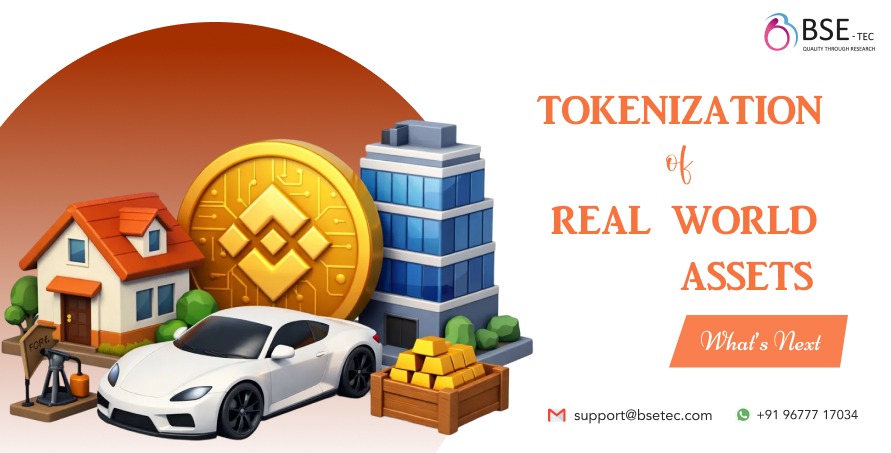
In 2026, real-world asset (RWA) tokenization is transforming how people invest, trade, and raise capital.
What was once a blockchain experiment is now becoming a serious financial infrastructure layer. Real estate, bonds, gold, private equity, and even carbon credits are being converted into blockchain-based digital tokens — making assets more liquid, accessible, and globally tradable.
If you’re an investor, business owner, or fintech startup, understanding RWA tokenization in 2026 is no longer optional — it’s strategic.
What Is Real-World Asset Tokenization?
Real-world asset tokenization is the process of converting ownership of physical or traditional financial assets into digital tokens on blockchain.
Each token represents a share or fraction of an asset and can be securely traded or transferred.
Examples of Tokenized Assets:
- Real estate properties
- Government bonds & treasuries
- Gold and commodities
- Private equity funds
- Infrastructure projects
- Revenue-sharing business models
- Carbon credits and ESG assets
By placing these assets on blockchain, businesses enable:
- Fractional ownership
- Faster settlement
- Lower transaction costs
- Transparent audit trails
- 24/7 global access
Why RWA Tokenization Is Booming in 2026
The shift is not driven by hype — it’s driven by real financial needs.
1. Liquidity for Traditionally Illiquid Assets : Real estate and private equity typically lock capital for years. Tokenization allows fractional trading and secondary market access.
2. Institutional Adoption Is Growing :Banks and financial institutions are launching tokenized bonds and digital securities platforms.
3. Regulatory Clarity Is Improving :Countries like Singapore, UAE, and parts of Europe are providing structured digital asset frameworks.
4. Global Investor Access :Tokenization removes geographical barriers, allowing cross-border investment participation.
How Businesses Can Launch an RWA Platform in 2026
If you’re planning to tokenize assets, here’s a simplified roadmap:
Step 1: Legal Structuring : Define whether the asset qualifies as a security token and comply with local regulations.
Step 2: Smart Contract Development : Build programmable compliance, investor restrictions, and automated yield distribution.
Step 3: Token Issuance Model :Choose between:
- Security tokens
- Asset-backed ERC-20 tokens
- Fractional NFT models
Step 4: Marketplace Development : Enable compliant trading and liquidity management.
Step 5: Custody & Reporting Systems :Secure wallets, dashboards, and investor transparency tools.
Why 2026 Is the Turning Point for RWA Tokenization
Capital markets are evolving. The next wave of blockchain adoption will focus on:
- Tokenized stock exchanges
- On-chain private credit markets
- Central bank collaborations
- Fully regulated digital securities ecosystems
The infrastructure is being built now — early adopters will gain the competitive advantage.
How BSEtec Helps You Build RWA Platforms
At BSEtec, we provide end-to-end real-world asset tokenization development services.
Our Expertise Includes:
- Asset tokenization platform development
- Security token creation
- Smart contract architecture
- Digital securities marketplace development
- DeFi integration for RWAs
- Cross-chain asset solutions
- Compliance-ready blockchain infrastructure
- Institutional-grade dashboards
We’ve worked on enterprise blockchain solutions, mining systems, Web3 ecosystems, and secure digital asset infrastructures.
If you are planning to tokenize real estate, bonds, commodities, or private equity assets — BSEtec can help you build a secure, scalable, and compliant platform.Businesses that move early in RWA will lead the next phase of digital finance. Visit BSEtec to explore how we can bring your asset tokenization project to life.