Data is the foundation of the digital economy. From enterprise software and artificial intelligence (AI) to Web3 platforms and IoT ecosystems, how data is stored directly impacts security, scalability, performance, and compliance. As we approach 2026, traditional centralized storage systems are facing increasing pressure from rising costs, cyber threats, and limited scalability.
This is where decentralized storage is emerging as a critical alternative—and for many organizations, a strategic necessity.
What Is Decentralized Storage
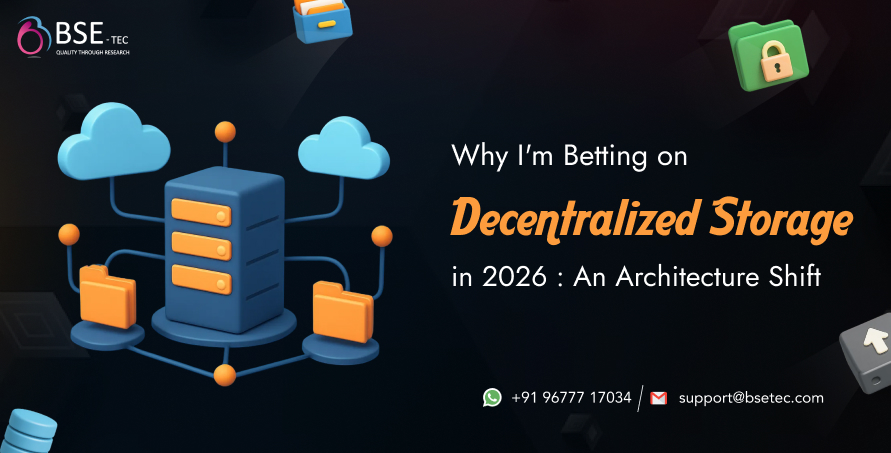
Decentralized storage is a data storage architecture where information is distributed across multiple independent nodes instead of being stored on a single centralized server or cloud provider. Technologies such as IPFS, Filecoin, Arweave, and blockchain-based storage networks enable data to be fragmented, encrypted, and stored securely across a global network.
Unlike centralized systems that rely on a single authority, decentralized storage uses cryptography, redundancy, and consensus mechanisms to ensure data integrity, availability, and transparency.
Key Limitations of Centralized Storage Systems
While centralized cloud storage has been the industry standard for decades, it presents several challenges:
- Single points of failure that can cause downtime and data loss
- High infrastructure and scaling costs
- Vendor lock-in that limits flexibility and control
- Increased exposure to cyberattacks and data breaches
- Limited data ownership and transparency
As data volumes grow exponentially due to AI, big data, and connected devices, these limitations become increasingly difficult to manage.
Why 2026 Is a Turning Point for Decentralized Storage
Several global technology and business trends are accelerating the shift toward decentralized data storage.
1. Rapid Growth of AI and Data-Driven Applications
AI systems require tamper-proof, verifiable, and auditable data. Decentralized storage ensures data authenticity and traceability, making it ideal for AI training, analytics, and machine learning pipelines.
2. Expansion of Web3 and Decentralized Applications (dApps)
Web3 applications depend on decentralized infrastructure by design. Storing critical application data on centralized servers undermines decentralization, making decentralized storage a foundational component of blockchain and Web3 ecosystems.
3. Increased Focus on Data Privacy and Regulatory Compliance
Global regulations such as GDPR and emerging data governance laws demand greater transparency, access control, and accountability. Decentralized storage improves data traceability and supports compliance-driven architectures.
4. Demand for Resilient and Fault-Tolerant Infrastructure
Organizations need systems that remain operational despite outages, attacks, or infrastructure failures. Decentralized storage enhances resilience and uptime by distributing data across multiple nodes and regions.
Decentralized Storage and Hybrid Cloud Architectures
Decentralized storage does not replace cloud computing—it complements it. Many enterprises are adopting hybrid architectures that combine centralized cloud services for speed and performance with decentralized storage for security, resilience, and long-term data integrity.
This hybrid approach enables businesses to:
- Optimize storage and infrastructure costs
- Improve data availability and redundancy
- Reduce dependency on a single cloud provider
- Strengthen overall system reliability
Key Benefits of Decentralized Storage for Enterprises
Decentralized storage delivers measurable advantages for modern organizations:
- Enhanced data security through encryption and distribution
- High availability with no single point of failure
- Long-term cost efficiency and predictable storage economics
- Censorship-resistant and tamper-proof data access
- Secure, trustless data sharing across partners and stakeholders
These benefits make decentralized storage especially valuable for industries such as healthcare, finance, supply chain, media, and energy.
Challenges to Address Before Adoption
Despite its benefits, decentralized storage requires careful planning. Organizations must consider:
- Performance and latency optimization
- Governance and access control models
- Integration with existing enterprise systems
- Data lifecycle and storage management
Selecting the right technology stack and implementation partner is critical to successful deployment.
How BSEtec Enables Decentralized Storage Solutions
BSEtec specializes in designing and implementing scalable decentralized storage architectures integrated with blockchain, AI, and enterprise platforms. From strategic architecture planning to production-ready deployment, BSEtec helps organizations move beyond experimentation and build secure, future-proof data infrastructure.
Conclusion
By 2026, decentralized storage will play a central role in modern data architectures. As enterprises demand greater control, security, compliance, and resilience, decentralized storage offers a scalable and future-ready approach to data management in an increasingly connected world.
To learn how decentralized storage can enhance your business infrastructure, connect with BSEtec today.our digital infrastructure, visit bsetec.com and explore tailored solutions built for scalability and trust.