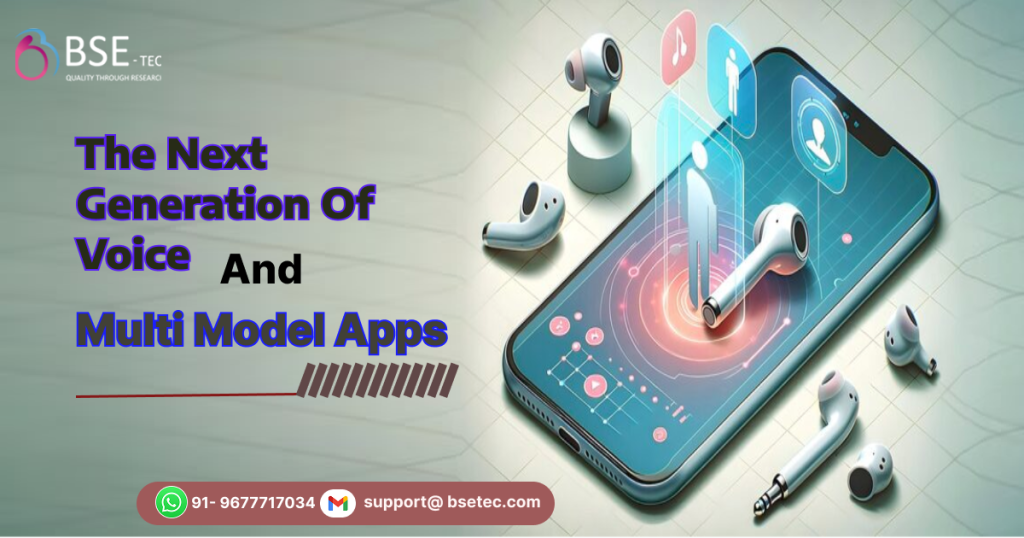
The Next Generation of Voice and Multimodal Apps In 2025, apps are evolving fast. It’s no longer just about tapping and swiping — modern applications are embracing voice, vision, touch, and context to deliver seamless, intuitive, and human-like experiences. This shift from simple UI to truly multimodal interaction is transforming how users engage with technology.
What’s Driving the Shift: Key Trends & Technologies ?
• Multimodal + Voice AI Integration
Today’s voice AI isn’t isolated — it’s part of a broader multimodal ecosystem. Modern systems combine speech, text, images, and other inputs simultaneously, enabling richer, more flexible interactions.
For example, the latest generation of AI models supports voice + vision + touch — meaning users can speak, tap, or show an image (or a live camera view) and get meaningful responses that respect context across modalities.
• Natural-Language Understanding + Emotional & Context Awareness
It’s not enough for a system to just hear words. The newest voice-based systems understand intent, context, emotion, and user history. They can detect tone or frustration in a user’s voice and adapt responses accordingly — making interactions feel more empathetic and human.
• On-Device & Privacy-First Processing
With growing concerns about user privacy and latency, many voice/multimodal solutions now support on-device processing — meaning speech recognition, NLP, and even voice synthesis happen locally, without sending data to cloud servers. This boosts responsiveness and protects user data.
• Multilingual, Dialect & Code-Switching Support
Especially important for global and diverse audiences: modern voice-multimodal apps can handle multiple languages, regional accents/dialects, and code-switching — allowing smooth interaction even when users mix languages or speak in non-standard accents. • Accessibility, Inclusivity & Omnichannel Engagement
Multimodal apps make technology more accessible: voice helps visually-impaired users, gesture or vision-based interactions help users with limited mobility, and multimodal design ensures consistent experience across devices (smartphones, kiosks, AR/VR, etc.).
How It Works: Workflow in Building Voice & Multimodal Apps
Here’s a high-level view of how development teams (like yours) approach building these next-gen apps:
- Requirement & Modality Planning
- Decide which modalities to support: voice input, text, vision (images or live camera), touch/gestures.
- Evaluate user base: region, languages, accessibility needs.
- Model & Engine Selection
- Use advanced AI models or frameworks that support multimodal inputs (speech-to-text, vision, NLP, voice synthesis).
- Opt for on-device or edge-based solutions if privacy or latency matters.
- Natural Language Processing & Context Management
- Build or integrate NLP layers that can understand intent, context, and maintain conversation history across sessions.
- Incorporate emotion or sentiment detection if needed (for customer support, care, or UX personalization).
- Multimodal Integration & UI/UX Design
- Design flexible UI flows that let users switch seamlessly between voice, touch, and visual inputs.
- Provide visual feedback for voice commands (e.g. show results, highlight recognized items, show images or options).
- Ensure accessibility — e.g. combine voice + visual cues for users with disabilities.
- Testing & Training, Iteration
- Test across languages, accents, varying lighting (if vision involved), noisy backgrounds (for voice).
- Collect user feedback; iterate UX to ensure fluid transitions between modalities.
- Deployment & Monitoring
- Deploy to devices, making sure latency and privacy constraints are met.
- Monitor usage — multimodal input statistics, drop-off points, common errors — to iterate and improve.
Role of Development Companies (e.g. BSEtec)
Development firms like BSEtec play a critical role in turning these technologies into usable products. Here’s how a company like yours can contribute:
- Custom Voice & Multimodal Interface Development — You integrate speech recognition, vision APIs, and NLP engines into bespoke apps tailored for clients (retail, education, enterprise tools).
- Localization & Multilingual Support — Handling regional languages, accents, and dialects — critical for markets like India — to make voice interactions smooth for local users.
- Privacy-First & On-Device Solutions — For clients with sensitive data (healthcare, enterprise), deploying edge/on-device voice AI to ensure compliance.
- UX/Design Consulting for Multimodal Flow — Designing fluid user journeys that allow smooth switching between voice, touch, and visual input — making interfaces intuitive across devices.
- Maintenance & Continuous Improvement — Collecting usage data, refining voice models, UX tweaks, adapting to new devices (smartphones, wearables, kiosks).
Real-Time Use Case: Voice + Multimodal App for Retail Shopping
Imagine a mobile shopping app — built by a company like BSEtec — with the following features:
- User speaks: “Show me red running shoes under ₹3,000”
- App responds (voice + UI): Displays a list of matching shoes, with images & prices.
- User taps one item ➜ App shows product details.
- User asks (voice): “Do you have size 9 in stock?”
- App checks inventory and replies: “Yes — 2 pairs available. Would you like me to add to cart?”
- User says: “Yes, and apply a 10% discount coupon ‘FESTIVE10’.”
- App responds (voice & UI): Applies coupon, shows updated price, and prompts for payment method.
- User chooses method by tapping, or speaks choice — checkout completes.
This real-time, fully voice + visual + touch workflow shows how multimodal apps can simplify shopping — making it natural, fast, and accessible even when user’s hands are busy (commuting, walking) or visually impaired.
Such apps deliver:
- Faster, frictionless UX, especially on mobile/low-bandwidth devices.
- Wider reach, because of multilingual & accent support.
- Accessibility & inclusion, supporting users with disabilities.
- Competitive advantage — brands offering voice + visual shopping will stand out.
Why Now: Why 2025 Is the Right Moment
We’re at an inflection point because:
- AI models now natively support multimodal inputs — not just text.
- Latency and privacy constraints are being solved by on-device processing and edge-AI. Demand for accessible, inclusive, multilingual apps — especially in emerging markets — is growing.
- User expectations are changing: people expect conversational, natural interactions rather than rigid UIs.
Conclusion
The next generation of apps isn’t about replacing taps with voice — it’s about blending voice, touch, vision, and context to create flexible, human-centric experiences. For development companies like BSEtec & others, this shift represents both a massive opportunity and a technical challenge.
By embracing multimodal design, voice AI, privacy-first architectures, and accessible UX, companies can build the next wave of intelligent applications — ones that feel natural, inclusive, and future-ready. Stay connected with BSEtec!