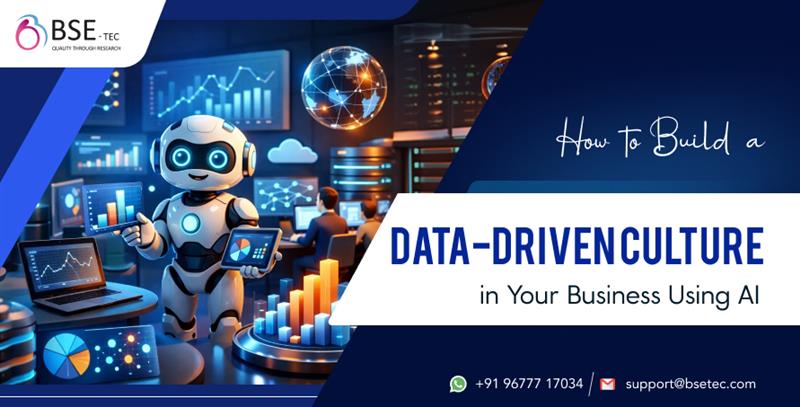
In today’s fast-paced business world, making decisions based on data is no longer optional—it’s essential. With AI transforming raw data into clear, actionable insights, businesses can move faster, reduce risk, and make smarter decisions with confidence.
Understanding Data-Driven culture
A data-driven culture is one in which a company employs facts, numbers, and data insights to guide decisions rather than depending solely on intuition. It means that teams at all levels should trust data, ask the proper questions, and rely on genuine evidence to determine the best course of action.
Unlike intuition-based decisions, which are based on personal experience or assumptions, data-driven decisions are supported by specific insights and patterns. While intuition can still be useful, data reduces guesswork, improves accuracy, and produces more consistent results across the firm.
Why AI is essential for a data-driven business.
Transforming raw data into actionable insights
AI analyses enormous amounts of data quickly and detects patterns that humans may overlook. It converts unstructured and complex data into clear insights that businesses may use to make better decisions, forecast trends, and identify new possibilities.
Speed, precision, and scalability advantages
AI provides insights in real time, helping firms to adapt more quickly to market shifts. It lowers human error, enhances decision accuracy, and scales readily as data grows, making it suitable for both small and large organisations.
Leadership’s Role in Driving Data Adoption
Leadership plays a critical role in building a strong data-driven culture. When leaders actively use data in their own decision-making, it sets a clear example for the entire organisation and reinforces the importance of relying on facts over assumptions.
Building trust in data
Leaders build trust by ensuring data is accurate, transparent, and easy to access.
Encouraging data-first decision-making
Leaders encourage data-first thinking by asking for evidence-based decisions and reducing bias.
Identifying the Right Data Sources
Choosing the right data sources is essential for building a reliable data-driven strategy. Businesses need to understand where their data comes from and how it supports decision-making.
- Internal vs. external data
Internal data includes information from within the organisation, such as sales records, customer behaviour, and operational metrics. External data comes from outside sources like market trends, industry reports, and customer feedback, helping businesses gain broader insights and context. - Ensuring data quality and consistency
High-quality data must be accurate, complete, and up to date. Consistent data standards and regular validation ensure insights are trustworthy, and decisions are based on reliable information.
Embedding AI Into Everyday Workflows
Embedding AI into daily business workflows helps teams work smarter, not harder. When AI becomes part of routine processes, it turns data into real-time support for decision-making.
AI can streamline operations by optimizing processes and predicting issues before they occur. In marketing, it helps analyze customer behavior and personalize campaigns. For sales, AI improves forecasting and lead scoring, while in finance, it enhances budgeting, risk analysis, and fraud detection.
By automating insights and reporting, AI reduces manual effort and delivers timely, accurate reports. This allows teams to focus on strategy and action instead of spending time gathering and analyzing data.
Measuring Success of a Data-Driven Culture
The success of a data-driven culture is measured by how effectively data influences decisions and outcomes. Clear metrics help businesses understand what’s working and where improvements are needed.
Using KPIs and performance tracking, organizations can monitor progress, align teams with business goals, and evaluate the impact of data-driven initiatives. These metrics provide visibility into performance and support informed decision-making.
Continuous improvement with AI feedback allows businesses to refine strategies over time. AI analyzes results, highlights gaps, and offers insights that help teams adapt quickly, improve accuracy, and drive ongoing growth.
Conclusion
Building an AI-powered data-driven culture delivers long-term value by enabling smarter decisions, faster innovation, and sustainable business growth. When data and AI are embedded into everyday processes, organizations gain deeper insights, reduce risk, and stay competitive in a rapidly evolving digital landscape.
With BSEtec as a trusted technology partner, businesses can start building this culture today by identifying the right data, adopting AI-driven analytics, and empowering teams with the tools and expertise they need. Taking these steps now helps organizations unlock the full potential of data and create a future-ready, insight-driven enterprise.