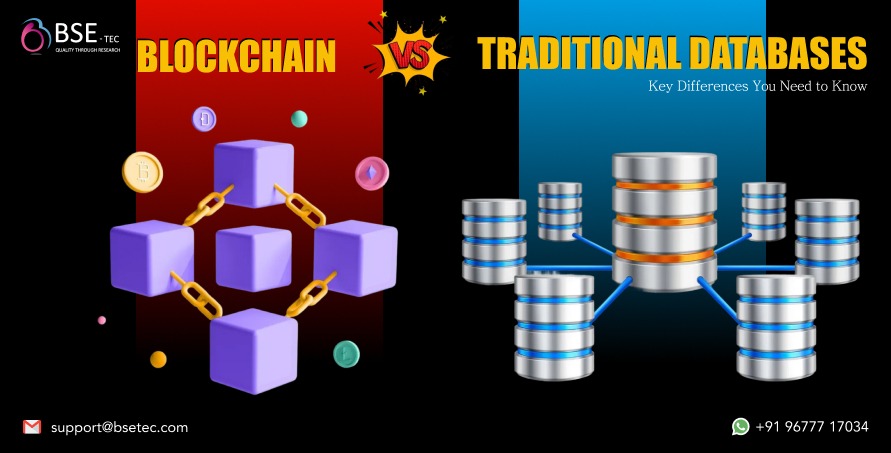
Modern apps depend on reliable data storage, and while traditional databases have been the standard for years, blockchain is gaining popularity for its transparency and security. This comparison allows users to quickly learn the fundamental differences between blockchain and traditional databases and choose the one that best meets their needs.
What is blockchain technology?
Blockchain technology is a secure way to store data without relying on a central authority. Instead of keeping information in one place, it spreads data across multiple computers, making the system more transparent and reliable.
Information is saved in blocks, and each block is securely linked to the next, creating a chain that is extremely difficult to change or tamper with.
What are traditional databases?
A traditional database stores data in a centralized system managed by a single authority. It commonly uses SQL databases for structured data and NoSQL databases for more flexible data handling.
Traditional databases are widely used in websites, mobile apps, banking systems, and enterprise applications where fast performance and controlled access are required.
Key Differences Between Blockchain and Traditional Databases
| KEY DIFFERENCES | BLOCKCHAIN | TRADITIONAL DATABASES |
Data Structure | Blockchain, on the other hand, stores data in blocks that are linked together in a chain. Once a block is added, it cannot be changed without affecting all subsequent blocks, which makes the data more secure but less flexible. | Traditional databases store information in tables, rows, and columns, making data easy to organize, update, and retrieve. Each record stands alone and can be modified or deleted when needed. |
Control and Ownership | Blockchain operates on a distributed network, where no single party owns the data. Control is shared among multiple participants, reducing dependence on trust in one organization and increasing fairness and reliability. | Traditional databases are controlled by a central authority, such as a company or organization. This authority decides who can access, edit, or delete the data, giving full control to one entity. |
Data Security | Blockchain is considered tamper-resistant because data is encrypted and distributed across multiple nodes. Any attempt to alter information would require changing it across the entire network, making unauthorized changes extremely difficult. | Security is maintained through passwords, firewalls, access controls, and backups. While effective, these systems are still vulnerable if the central server is compromised. |
Transparency and Trust | Blockchain provides open and verifiable records, where transactions can be viewed and validated by network participants. This transparency builds trust without relying on a central authority. | Usually offer limited visibility, where only authorized users can view or modify data. This works well for privacy but requires trust in the organization managing the system. |
Speed and Performance | Blockchain systems are generally slower, as transactions must be verified by multiple participants. This trade-off prioritizes security and accuracy over speed. | Traditional databases are designed for fast data processing, handling thousands of transactions per second with minimal delay. This makes them ideal for applications that require real-time performance. |
Scalability | Blockchain networks face scalability challenges, as increasing the number of transactions can slow down the network. Many blockchains are still working on solutions to improve performance at scale. | Traditional databases can scale easily by upgrading servers or adding more resources, allowing them to handle growing data and user demands efficiently. |
Cost and Maintenance | Blockchain requires initial setup costs and ongoing network fees, such as transaction or gas fees. While it reduces the need for intermediaries, operational costs can vary depending on network usage. | Traditional databases involve infrastructure costs, licensing fees, and ongoing administrative maintenance. These expenses are predictable but can grow as systems expand. |
Use Cases: When to Choose What
Situations Where Traditional Databases Work Best
Traditional databases are ideal when you need fast, efficient, and flexible data management under a centralized system. Examples include:
- Banking systems require transactions be processed quickly.
- E-commerce platforms manage inventory, orders, and customer data.
- Corporate ERP or HR systems that require frequent updates and data modifications.
Scenarios Where Blockchain Offers Clear Advantages
Blockchain shines in situations where trust, transparency, and security are critical, especially in decentralized environments. Examples include:
- Supply chain tracking, ensuring product authenticity from origin to delivery.
- Digital identity verification without relying on a central authority.
- Smart contracts that automatically execute agreements once conditions are met.
- Cryptocurrency and decentralized finance (DeFi) applications.
Blockchain and Databases Working Together
Why It Doesn’t Always Have to Be One or the Other
Blockchain and traditional databases complement each other. Many businesses find that using both systems allows them to balance speed, flexibility, and security. For example, sensitive or frequently updated data can remain in a traditional database, while critical, tamper-proof records can be stored on a blockchain.
Hybrid Approaches Used by Modern Companies
- Supply Chain Management: Companies such as Walmart and Nestlé employ databases for day-to-day operations and blockchain for ensuring authenticity and regulatory compliance.
- Finance & banking: Banks use blockchain for cross-border settlements and security auditing, while transactional data is stored in fast, centralised databases.
- Healthcare: Patient records are stored in secure databases, and blockchain ensures data integrity and access control across hospitals and laboratories.
A hybrid method provides the best of both worlds—fast, efficient processing combined with the trust, transparency, and security of blockchain.
How BSEtec Helps Businesses Decide Between Databases and Blockchain
Choosing between a traditional database and blockchain can be confusing for businesses. BSEtec simplifies this process by acting as a trusted technology partner, helping companies pick the right solution based on their specific needs. Their approach ensures that businesses get a system that balances speed, security, and transparency.
Here’s how BSEtec supports companies in making the right choice:
- Assessing Business Needs: They analyze your goals, processes, and data requirements to determine the most suitable system.
- Providing Tailored Recommendations: Suggests traditional databases for high-speed operations, blockchain for tamper-proof records, or a hybrid system combining both.
- Designing Hybrid Solutions: Integrates blockchain and databases when both performance and security are critical.
- Implementation & Support: Manages development, deployment, and ongoing maintenance to ensure your system is reliable, scalable, and future-ready.
Conclusion
Choosing the right data system is all about balancing speed, flexibility, and trust. Traditional databases are perfect for fast, centralized operations, while blockchain shines when security and transparency are key. Many businesses benefit from a hybrid approach, getting the best of both worlds.
With BSEtec’s expertise, companies can confidently decide which solution fits their needs, design scalable systems, and ensure their data is secure, reliable, and ready for future growth.