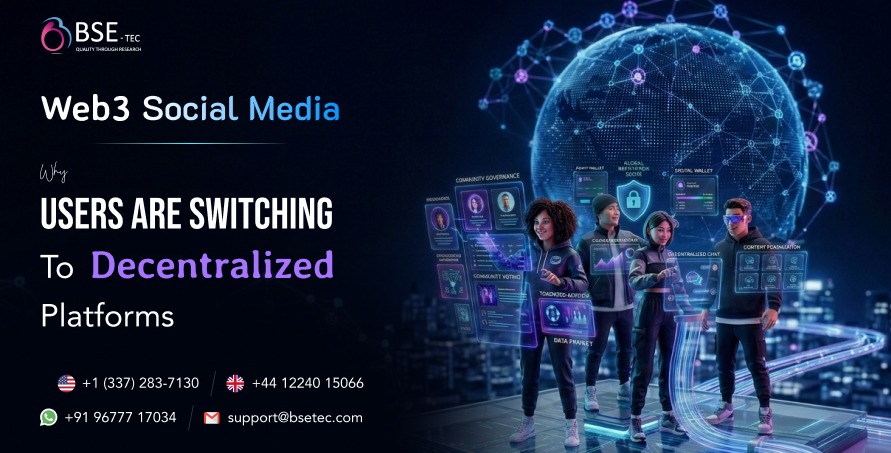
Social media in 2026 is no longer just about likes, followers, and endless scrolling. Today, users are becoming more aware of how centralized platforms control data, visibility, monetization, and even digital identity. As a result, Web3 social media is rapidly emerging as a smarter and more transparent alternative powered by decentralization, digital ownership, blockchain infrastructure, and community-driven ecosystems.
Instead of simply consuming content, users now want greater control over their online presence, personal information, and digital communities. Consequently, decentralized social platforms are reshaping the future of digital interaction.
Why Traditional Social Media Is Losing User Trust
Over the past few years, users have started questioning how traditional social media platforms actually operate behind the scenes. While these platforms still dominate global attention, growing concerns around privacy, censorship, and algorithm manipulation are pushing many users toward decentralized alternatives.
The Biggest Problems Users Face Today
Privacy Concerns Continue Growing: First off, users are becoming increasingly uncomfortable with how platforms track, collect, and monetize personal data for advertising purposes.
Algorithmic Control Is Exhausting: Furthermore, secretive algorithms often prioritize outrage, clickbait, and engagement farming instead of meaningful interactions.
Creators Don’t Truly Own Their Audience: In addition, creators remain heavily dependent on centralized platforms for visibility, monetization, and community reach.
Censorship Concerns Are Increasing: Moreover, account suspensions, shadow banning, and content restrictions can instantly impact creators and communities.
Mental Health and Digital Fatigue: Finally, many users feel overwhelmed by addictive content loops and constant algorithm-driven engagement systems.
As a result, people are actively looking for platforms that offer more transparency, ownership, and freedom online.
What Makes Web3 Social Media Different?
At its core, Web3 social media changes one major thing: Users own their digital identity instead of platforms controlling it.
Unlike traditional social apps, decentralized platforms connect user profiles to blockchain-based identities and crypto wallets.
Consequently, users gain control over:
- content
- followers
- digital identity
- monetization
- communities
More importantly, users can move between decentralized platforms without losing their audience or content.
That portability is becoming one of the biggest advantages of Web3 ecosystems in 2026.
Why More Users Are Switching to Decentralized Platforms
The shift toward Web3 social media is happening for multiple reasons.
Reclaiming Digital Ownership
Users are tired of being treated like products within advertising ecosystems. Instead, decentralized platforms allow people to truly own their online identity and data.
As a result, users gain more transparency and control over how their information is shared.
Escaping Algorithm Manipulation
Many users are frustrated with platforms that prioritize engagement metrics over authentic experiences.
Web3 platforms are now experimenting with transparent and community-driven algorithms that give users more control over the content they see.
Consequently, social experiences feel more organic and less manipulated.
Creators Want Fairer Monetization
Traditional social media platforms often take large percentages of creator revenue.
Web3 changes this completely.
Through smart contracts, NFTs, and tokenized communities, creators can earn directly from their audience without relying heavily on middlemen.
As a result, creators gain stronger financial independence and community ownership.
Users Want More Freedom Online
Because decentralized platforms operate across distributed blockchain networks, they are more resistant to centralized censorship and platform control.
This creates stronger digital freedom for creators and online communities.
The Technologies Powering Web3 Social Media
Web3 social media combines multiple decentralized technologies to create user-owned digital ecosystems.
Blockchain Infrastructure: Blockchain securely records ownership, identity, and transactions while maintaining transparency.
Decentralized Storage: Content is distributed across decentralized networks instead of centralized servers, making platforms more resilient and censorship-resistant.
Smart Contracts: Smart contracts automate payments, creator rewards, platform governance, and monetization systems.
Portable Social Graphs: Users can move across applications without losing followers, content, or digital identity.
AI and Web3 Integration: In 2026, AI is becoming a major part of decentralized social platforms through personalized experiences, intelligent moderation, creator tools, and decentralized identity verification.
Real Web3 Social Platforms Gaining Attention in 2026
Several decentralized social platforms are already shaping the future of digital communities.
- Farcaster: Users control wallet-based decentralized identities and communities.
- Lens Protocol: Creators can carry followers and content across multiple decentralized applications.
- Mirror.xyz: Writers can publish content, crowdfund projects, and convert posts into NFTs.
- Bluesky: Users gain more control over algorithms and social experiences.
- SocialFi Platforms: Platforms like Friend. Tech is introducing tokenized creator economies and community-driven engagement systems.
As these ecosystems continue growing, users are becoming active participants rather than products inside advertising systems.
Challenges Slowing Web3 Social Media Adoption
Although Web3 social media is growing rapidly, challenges like wallet complexity, gas fees, moderation issues, and competition from traditional platforms still slow adoption. However, users continue moving toward decentralized platforms for better privacy, ownership, and digital freedom.
Why Businesses Are Investing in Web3 Social Media
Businesses are now realizing that decentralized social ecosystems offer something traditional platforms cannot fully provide: direct audience ownership and stronger community control. As a result, brands no longer have to depend entirely on constantly changing algorithms to reach their customers.
Moreover, Web3 platforms allow businesses to build tokenized loyalty programs, reward communities through NFTs, and create more transparent engagement using blockchain-based systems. In addition, smart contracts help brands enable direct peer-to-peer monetization without relying heavily on intermediaries.
Consequently, more businesses are actively exploring decentralized communities as the future of digital engagement.
BSEtec stands out because they blend years of technical expertise with a suite of ready-to-launch solutions that help companies scale rapidly. Consequently, businesses gain a reliable partner that can transform complex ideas into functional, market-ready digital products.
Why Leading Brands Choose BSEtec
Companies partner with BSEtec to leverage their high-performance scripts and custom development services that ensure long-term operational success. Furthermore, their deep focus on user experience and security makes them the go-to choice for enterprises navigating the shift to web3 services.
The Strategic Edge for Modern Enterprises
Elite Technical Proficiency: As a premier Blockchain development company, they specialize in building secure, scalable infrastructures like Layer 2 solutions and decentralized applications.
Rapid Deployment: Moreover, their pre-built scripts allow startups to go live in record time, specifically giving them a head start in competitive markets.
Customizable Architectures: In addition, every solution is designed to be highly modular, meaning it can be tailored to meet the unique needs of any business model.
Verified Reliability: Furthermore, with over a decade of experience and a global client base, they provide the stability needed for large-scale digital transformations.
User-Centric Design: Finally, they prioritize intuitive interfaces, thus ensuring that even the most complex technology remains accessible to the end-user.
The team is dedicated to helping businesses integrate the latest web3 technologies into their existing workflows without the usual technical friction. As a result, clients receive a future-proof roadmap that balances innovative features with the practical stability required to dominate their industry.
The Future of Social Media Is Decentralized
As blockchain adoption continues to grow, decentralized communities are becoming more popular among users seeking transparency and control. Meanwhile, creator-owned ecosystems are giving content creators better monetization opportunities and direct audience engagement. Furthermore, the integration of AI and Web3 is creating smarter and more personalized social experiences. Consequently, social media is shifting toward user-controlled platforms that prioritize privacy, ownership, and freedom.
In conclusion, Web3 social media is transforming the way people connect, share, and interact online by putting control back into the hands of users. With greater privacy, transparency, and new monetization opportunities, decentralized platforms are shaping the future of digital communities.
As this shift continues, BSEtec helps businesses stay ahead by building innovative, secure, and scalable Web3 social media platforms for the next generation of digital interaction.
Decentralization is transforming social media from platform-controlled networks into user-powered ecosystems — BSEtec