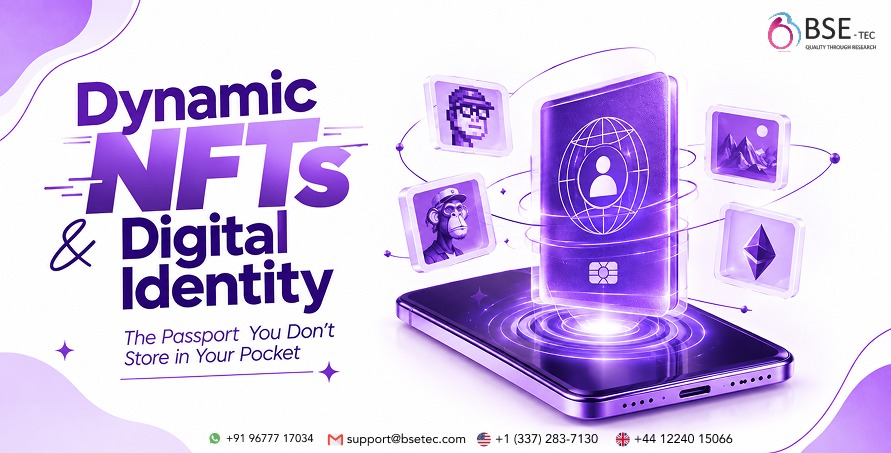
Imagine having a digital passport that does more than prove who you are. It could show your qualifications, memberships, certifications, achievements, access rights, or other verified information—and update as your status changes. That is where Dynamic NFTs and blockchain-based digital identity become interesting.
Unlike traditional NFTs that remain mostly unchanged after they are created, Dynamic NFTs can update their metadata based on new information, events, or verified data. This makes them useful for applications where identity and credentials need to evolve over time.
At the same time, Verifiable Credentials (VCs) are becoming an important part of digital identity infrastructure. In May 2025, the W3C published Verifiable Credentials 2.0 as a web standard for creating cryptographically secure, privacy-aware, and machine-verifiable digital credentials.
Together, these technologies point toward a different way of thinking about digital identity.
Why Are Traditional Digital Credentials Not Enough?
Most digital credentials are still fragmented.
A person may have:
- A government ID
- A university certificate
- Professional certifications
- Membership cards
- Event credentials
- Digital access permissions
Each organization may store and verify this information differently.
The result is repeated verification, duplicated records, and more opportunities for fraud or outdated information.
Blockchain introduces a different model where credentials can be cryptographically verified, while the user can hold and present them through a digital wallet.
The W3C Verifiable Credentials model is built around three roles: the issuer, holder, and verifier. The issuer creates the credential, the holder controls it, and the verifier checks whether it is authentic.
What Makes a Dynamic NFT Different?
A traditional NFT can represent a fixed digital asset.
A Dynamic NFT can change as new conditions are met.
For example, consider a professional certification represented digitally.
At the time of issue, it may show:
Certified Developer
After completing another course, the credential could update to:
Certified Developer | Advanced Level
Later, the credential could reflect renewal status or additional qualifications. The token itself does not necessarily need to be replaced every time the underlying information changes.
Dynamic NFT systems can use smart contracts and trusted external data sources to trigger metadata updates. This makes them suitable for assets and credentials whose information changes over time.
Dynamic NFTs as a Digital Identity Layer
The bigger opportunity is not simply replacing a physical card with an NFT.
It is creating a living digital identity.
A user’s identity could potentially include verified information such as:
- Education and certifications
- Professional achievements
- Memberships and affiliations
- Event participation
- Access permissions
- Loyalty status
- Verified ownership
- Reputation or achievement records
Instead of creating separate accounts and verification processes for every platform, users could present relevant credentials from their digital identity wallet.
Ethereum’s documentation describes decentralized identity systems where users can hold attestations and credentials in wallets and present them to applications when needed.
The Passport You Don’t Store in Your Pocket
Think about how a physical passport works.
It contains information that proves who you are. An authority issues it, and others can verify it when needed.
A blockchain-based identity system can work in a similar way, but digitally, using programmable credentials.
For example:
University → Issues digital degree → Student holds credential → Employer verifies it
Or:
Government/Authority → Issues credential → Citizen holds it → Service provider verifies it
The key difference is that these digital credentials can be verified online without every organization needing to store a separate copy of the same information.
W3C standards support digital credentials such as driver’s licenses, education certificates, and other identity documents in a secure and verifiable format.
Where Can Dynamic Digital Identity Be Used?
1. Education
Universities and training platforms can issue digital certificates that reflect a person’s current qualifications.
A credential could change when a learner completes additional courses, renews a certification, or reaches a new achievement level.
2. Professional Identity
Professionals could maintain a digital record of verified skills and certifications.
Instead of manually sending certificates to every employer, they could present verifiable credentials when required.
3. Memberships and Access
Companies, clubs, conferences, and online communities could issue dynamic credentials.
Membership status could automatically change when a subscription expires, renews, or reaches a particular level.
4. Loyalty Programs
A customer’s digital identity could reflect their loyalty level.
For example:
Silver → Gold → Platinum
Purchases, participation, or verified achievements could trigger changes to the credential.
5. Product Ownership and Provenance
Dynamic NFTs can also connect digital identity with physical products.
A luxury product, vehicle, collectible, or other asset could have a digital identity that records relevant ownership or provenance information. Dynamic NFT applications are already being explored for provenance and certification.
Privacy Is the Real Challenge
Digital identity is useful only when privacy is protected.
Storing a person’s complete personal information on a public blockchain can create serious privacy risks. Instead, sensitive data can stay off-chain while blockchain and cryptographic methods are used to verify specific information.
This is where selective disclosure and Zero-Knowledge Proofs (ZKPs) become useful.
For example, a website may only need to know:
“Is this person over 18?”
It does not need to know their exact date of birth. A privacy-focused identity system can verify the required information without revealing unnecessary personal details.
The goal is simple: prove what is needed without exposing everything.
Dynamic NFTs Are Not a Replacement for Identity Standards
It is important to understand that Dynamic NFTs and Verifiable Credentials are not exactly the same thing.
An NFT is a blockchain token representing a unique digital asset. A Verifiable Credential is a cryptographically verifiable claim issued by a trusted party.
They can work together.
For example, a business could use a credential system to verify a person’s certification while using an NFT-based layer to represent membership, achievement, or another programmable digital asset.
There are also emerging Ethereum standards exploring how NFTs can interact with verifiable credentials and identity information.
How BSEtec Can Help
Building a blockchain-based digital identity system requires more than developing an NFT smart contract.
BSEtec can help businesses design secure and scalable blockchain solutions around Dynamic NFTs, digital credentials, and identity-focused applications.
Our approach can include:
- Dynamic NFT and smart contract development
- Digital identity architecture
- Verifiable credential integration
- Wallet and authentication integration
- Privacy-focused identity design
- Smart contract security and testing
- API and backend integration
- Blockchain-based verification systems
- Credential lifecycle and access management
- Scalable Web3 application development
The focus is to build an identity system that can adapt as users, credentials, and business requirements change.
What Could the Future Look Like?
Digital identity could become much simpler in the future.
Instead of managing different certificates, memberships, and records separately, people could keep their verified digital credentials in one secure wallet.
Your education and certifications could be verified easily, memberships could update when they change.
Your achievements could become part of your digital profile.
Most importantly, businesses could verify only the information they actually need.
With W3C working on easier ways to use digital credentials across browsers and wallets, digital identity is slowly becoming a practical part of the modern web.
Final Thoughts
Dynamic NFTs can turn digital assets from static records into evolving credentials.
Combined with verifiable credentials, wallets, blockchain, and privacy technologies, they could create a new model for digital identity.
The future of identity may not be something you carry in your pocket. It may be something you securely control in your digital wallet.