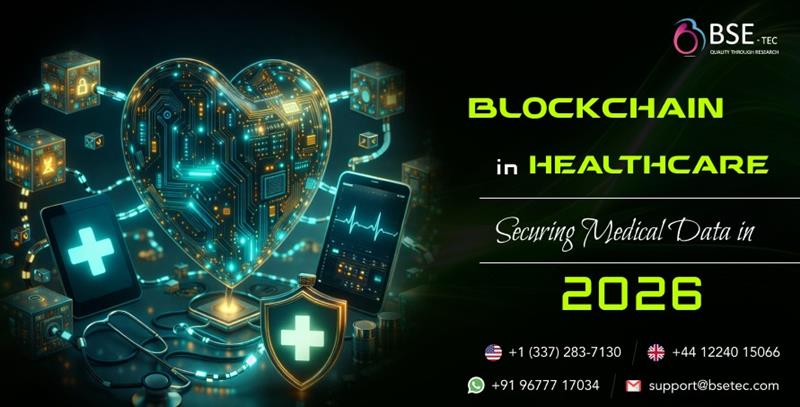
Today, healthcare is rapidly becoming digital with Electronic Health Records (EHRs), telemedicine, and wearable devices generating huge amounts of patient data. However, medical data breaches are increasing worldwide, and traditional centralized systems often struggle to protect sensitive records. Therefore, healthcare organizations are turning to blockchain technology, which offers a more secure and decentralized way to manage medical data. As healthcare data continues to grow, understanding how blockchain protects medical information becomes essential.
What is Blockchain in Healthcare?
Blockchain is a decentralized and tamper-proof digital ledger that securely records and stores data. In healthcare, it helps keep medical records secure, transparent, and accessible only to authorized users.
By reducing dependence on centralized databases, blockchain improves the security and reliability of patient data.
Now, let’s explore why the healthcare industry increasingly needs blockchain technology.
Why Healthcare Needs Blockchain in 2026
Healthcare organizations today handle massive amounts of sensitive medical data, making security a major concern. As digital healthcare continues to grow, protecting patient information has become more critical than ever.
Key reasons driving blockchain adoption in healthcare include:
- Secure patient data management – helps protect sensitive medical records from unauthorized access
- Prevention of medical identity theft – reduces the risk of fraud and data misuse
- Regulatory compliance – supports healthcare regulations such as HIPAA and GDPR
- Growth of telemedicine – increases the need for secure digital healthcare systems
At the same time, industry reports suggest that the blockchain healthcare market could reach nearly $345 billion by 2032, highlighting the rapid adoption of secure decentralized technologies.
Therefore, it is important to understand how blockchain actually secures medical data in healthcare systems.
How Blockchain Secures Medical Data
Blockchain introduces several technological advantages that improve healthcare data security.
1. Advanced Encryption & Quantum‑Resistant Security
With concerns around future quantum attacks, current blockchain systems are integrating:
- Post‑quantum cryptography
- Hybrid encryption layers
- Secure private key recovery without compromising security
These advancements future‑proof medical data against emerging cyber threats
2. Distributed & Zero‑Trust Data Networks
Instead of relying on centralized servers, blockchain now supports zero‑trust distributed networks where every node verifies data independently.
This means:
- No single point of failure
- Continuous verification of data integrity
- Better resistance against ransomware and system outages
3. Immutable & Verifiable Medical Records
With blockchain, once a record is written, it cannot be altered or erased.
What’s new in 2026:
- Multi‑factor cryptographic hashing — stronger hashing methods reduce the risk of data tampering.
- Time‑stamped audit trails — automatic audit logs for every access and update.
This guarantees truly tamper‑proof patient histories that regulators and providers can trust.
4. On‑Chain Identity & Authentication
Instead of passwords or tokens, blockchain now supports:
- Decentralized digital identities (DIDs)
- Biometric + blockchain authentication
- Secure multi‑device identity sync
This ensures that only verified users access sensitive medical information.
Real-Time Data in Healthcare Security
In 2026, blockchain is transforming healthcare by enabling real-time security for patient data. As a result, millions of records are protected instantly as they are created and shared.
Moreover, blockchain allows instant verification, secure data exchange, and patient-controlled access, reducing errors and improving timely care.
In fact, platforms today support over 120 million secure real-time data transactions annually, making healthcare safer, faster, and more transparent.
Key Blockchain Applications in Healthcare (2026)
Blockchain is transforming healthcare beyond simple data storage by enabling several advanced applications.
1.Decentralized Electronic Health Records (EHR) — Blockchain allows secure and seamless sharing of patient records between hospitals and healthcare providers, improving data accessibility and coordination.
2.Smart Contracts for Insurance Claims — Smart contracts help automate insurance verification and claim processing, reducing paperwork and speeding up payments.
3. Pharmaceutical Supply Chain Tracking — Blockchain helps track medicines throughout the supply chain, preventing counterfeit drugs and ensuring authenticity.
4.Clinical Trial Transparency — Blockchain secures clinical research data, making it transparent and protecting it from manipulation.
5.Secure Medical IoT Data — With the rise of wearable health devices, blockchain helps protect and securely manage data generated by medical IoT systems.
Today, over 70 million patient records are already secured using blockchain-based EHR systems worldwide, showing the growing adoption of this technology.
As these applications continue to expand, several new trends are shaping blockchain adoption in healthcare.
Top Blockchain Healthcare Trends in 2026
Blockchain adoption in healthcare is growing rapidly as several new technologies continue to emerge. These innovations are helping healthcare organizations improve security, transparency, and efficiency in managing medical data.
Key trends shaping blockchain healthcare in 2026 include:
1.Decentralized Patient Identity Systems – Patients can securely manage their digital identities and control access to their health records.
2.AI + Blockchain Healthcare Platforms – Blockchain ensures that AI systems use verified and reliable patient data for better medical insights.
3.Cross-Border Health Data Sharing – Healthcare providers can securely exchange patient records across countries, improving global medical collaboration.
4.Blockchain-Powered Telemedicine Payments – Smart contracts automate billing and payments for telemedicine services, making digital healthcare transactions faster and more secure.
As these technologies continue to evolve, healthcare organizations increasingly require expert blockchain development partners to build secure and scalable systems.
How BSEtec is Transforming Blockchain Healthcare Solutions
As the healthcare industry increasingly adopts blockchain technology, BSEtec is helping organizations build secure and scalable digital healthcare systems.
With strong expertise in Web3 and enterprise blockchain development, the company supports healthcare providers in protecting sensitive medical data while enabling efficient data sharing.
At BSEtec, the focus is on delivering end-to-end blockchain solutions, starting from consulting and architecture design to development, deployment, and ongoing support. This approach helps healthcare organizations adopt blockchain technology smoothly and securely.
Here are some key ways BSEtec supports blockchain innovation in healthcare:
- Blockchain Consulting & Strategy – helping healthcare organizations identify the right blockchain use cases and build secure digital infrastructure.
- Custom Blockchain Development – building tailored blockchain platforms that protect patient records and support healthcare data management.
- Smart Contract Development – automating healthcare processes such as insurance claims, consent management, and data access.
- Private Blockchain Networks – creating secure and permissioned networks for hospitals and healthcare providers to share medical information safely.
- Decentralized Applications (dApps) – developing blockchain-powered healthcare applications that improve transparency and security.
In addition, BSEtec’s security-focused development approach ensures that blockchain systems include advanced cryptographic protection, encryption, and secure data management, which are essential for handling sensitive healthcare information.
By combining blockchain expertise, secure architecture, and industry-focused solutions, BSEtec enables healthcare organizations to build trusted, transparent, and future-ready digital healthcare platforms.
With technology partners like BSEtec, blockchain is rapidly transforming how healthcare systems secure and manage medical data.
The Future of Blockchain in Healthcare
Looking ahead, blockchain is expected to play a major role in the future of healthcare innovation. It will support developments such as global decentralized health data networks, blockchain-based genomic data platforms, AI-powered medical research, secure healthcare data marketplaces, and patient-owned digital health identities.
As healthcare continues to digitize, blockchain will become essential for building secure, transparent, and decentralized systems that protect sensitive medical data.
Final thoughts
In 2026, blockchain is transforming healthcare data security by enabling tamper-proof records, decentralized storage, and patient-controlled access. These capabilities help healthcare organizations protect sensitive medical information while improving transparency and trust.
From securing medical records to supporting transparent clinical research, blockchain is addressing many of the key challenges in the healthcare industry. With the support of an experienced Blockchain development company like BSEtec, healthcare providers can build secure, scalable, and future-ready digital healthcare systems that protect patient data and drive innovation.
Connect with BSEtec today to explore how our blockchain development expertise can transform your healthcare solutions.