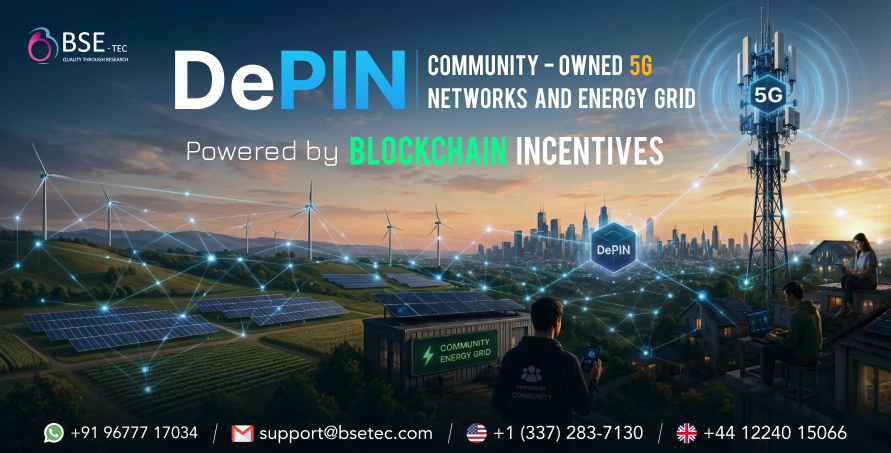
In 2026, DePIN officially broke out of the Web3 bubble and stepped right into the real world. We aren’t just talking about digital assets or speculative tokens anymore. Instead, we are looking at real, physical infrastructure, like 5G nodes on rooftops and solar panels sharing electricity, all powered, maintained, and owned by everyday communities.
As AI data centers continue to drain massive amounts of power, EV adoption rapidly increases energy demands, and telecom giants struggle with the astronomical costs of 5G rollouts, the traditional ways of building infrastructure are reaching a critical breaking point. As a result, businesses and governments are now searching for smarter, more scalable, and cost-effective models to meet the growing demand efficiently.
That is exactly where DePIN comes in.
Why Traditional Infrastructure Models Are Under Pressure
Right now, centralized telecom and energy systems are facing a perfect storm they were simply never built to handle.
- The Energy Crunch: Massive AI adoption has sent data center energy consumption through the roof, while global EV charging is creating highly unpredictable demand spikes on aging electric grids.
- The Cost Barrier: Telecom operators are dumping billions into standalone 5G infrastructure. Because deployment costs are too high in low-density or rural areas, they are actively delaying expansions, leaving millions with spotty connectivity.
- The Efficiency Gap: Infrastructure costs are skyrocketing much faster than actual operational efficiency.
The Reality of 2026: Centralized systems are too slow, too expensive, and full of single points of failure. DePIN flips this script by letting the community directly contribute connectivity and energy resources into a shared ecosystem.
What Makes DePIN Different From Earlier Web3 Trends?
The biggest shift in 2026 is that DePIN solves tangible, real-world problems. It bridges the gap between blockchain incentives and physical networks across several key sectors:
Wireless: 5G and IoT sensor connectivity.
Energy: Solar-powered microgrids and EV charging stations.
Compute: Decentralized GPU networks built specifically for AI workloads.
Instead of relying on a single corporate monopoly, businesses and individuals buy their own hardware, hook it up to the network, and let smart contracts handle the rest. For instance, if a business installs a wireless node on its roof, it automatically earns rewards based on the data traffic it supports.
Value flows back to the people building the network, not just a corporate boardroom.
Community-Owned 5G Networks Are Expanding Faster Than Expected
Traditional telecom expansion is plagued by endless red tape, massive tower costs, and major licensing delays. DePIN bypasses these gatekeepers entirely.
[User Installs Hardware] ➔ [Automatic Coverage Boost] ➔ [Blockchain Verifies Quality/Uptime] ➔ [Rewards Distributed]
This decentralized wireless model is scaling rapidly across smart manufacturing hubs, logistics corridors, and rural internet expansion projects.
Even traditional enterprises are stepping in, creating hybrid models where corporate networks seamlessly blend with community-powered connectivity layers to patch up dead zones.
Blockchain-Powered Energy Grids Are Becoming a Major Trend
The combination of AI infrastructure and EV charging has made energy grid balancing a critical global issue. In response, local communities are forming decentralized energy marketplaces.
Instead of sending excess solar power back to a heavily strained centralized grid for pennies, neighbors are trading energy directly with each other via blockchain-enabled microgrids.
Smart contracts now automatically handle:
Tracking energy contributions in real-time.
Executing peer-to-peer trades.
Managing dynamic pricing based on local supply and demand.
Rewarding participants for helping balance the local grid.
Why Enterprises and AI Are Suddenly Rushing In
Enterprises used to think blockchain was just for finance, but DePIN changed that perception by directly slashing operational and capital expenditures (CapEx).
The Enterprise Advantage
Rapid Scaling: Networks grow organically through community hardware participation.
Lower Spending: Companies don’t have to finance 100% of the physical infrastructure upfront.
Absolute Transparency: Real-time blockchain ledger tracking eliminates administrative overhead.
The AI Optimization Boost
AI is also accelerating this growth from behind the scenes.
In 2026, AI algorithms are integrated directly into DePIN networks to predict telecom congestion before it happens, automatically rebalance smart grids during peak hours, and intelligently route heavy GPU workloads across decentralized compute networks.
How BSEtec Is Helping Businesses Build Real-World DePIN Ecosystems
As the move toward decentralized operations accelerates, businesses need robust, production-grade technology partners to handle the complex underlying architecture.
This is where BSEtec comes in.
Rather than focus on experimental or highly speculative Web3 products, BSEtec delivers practical, enterprise-grade blockchain infrastructure tailored for physical deployment. Their specialized solutions include:
- DePIN Platform Architecture: Designing end-to-end decentralized networks for telecom and IoT.
- Smart Contract Automation: Eliminating middlemen to handle peer-to-peer energy trading and device coordination seamlessly.
- Tokenomics & Reward Engineering: Building sustainable, long-term incentive models that keep communities engaged.
- Decentralized Node Management: Providing scalable infrastructure tools to monitor uptime, traffic, and hardware contributions securely.
The Future of DePIN Beyond 2026
The blueprint has already been proven in telecom and energy, and now the expansion is just getting started. As a result, we are already witnessing the rise of early frameworks for decentralized autonomous mobility systems, drone communication networks, smart logistics, and localized edge computing. Furthermore, these innovations are paving the way for a more connected, scalable, and efficient digital future.
Ultimately, DePIN represents a massive philosophical and structural shift in infrastructure ownership.
The future isn’t about waiting for a centralized provider to bring services to your area; it’s about communities building, owning, and profiting from the very networks they rely on every single day.
Final thoughts
Ultimately, DePIN represents a massive shift in how the world builds and maintains physical networks. By replacing rigid, top-heavy corporate monopolies with community-driven incentives, we are paving the way for a more resilient and scalable future. Whether it is a peer-to-peer 5G hotspot or a neighborhood solar grid, the power is moving right back where it belongs, to the people who actually use it.
Of course, making this decentralized future work flawlessly requires ironclad code and seamless automation. That is why working with an experienced partner makes all the difference. As a premier Blockchain development company, BSEtec focuses on building the practical, production-ready blockchain foundations that modern enterprises need to launch and scale these next-generation DePIN ecosystems safely.