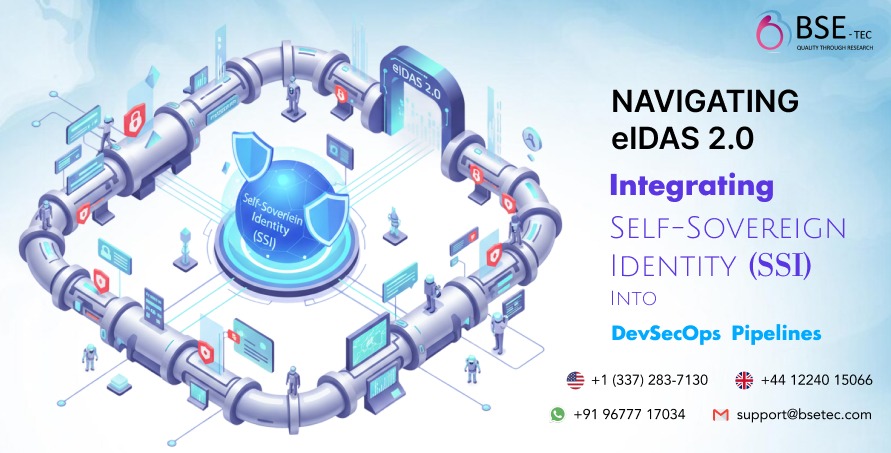
Digital identity is getting a massive upgrade in 2026. Businesses are moving beyond traditional IAM systems and embracing Self-Sovereign Identity (SSI) powered by eIDAS 2.0 and EUDI Wallets. Even more exciting, DevSecOps teams are now becoming key players in building secure, decentralized identity systems for modern cloud and CI/CD ecosystems.
eIDAS 2.0 in the Real 2026 Landscape
eIDAS 2.0 is transforming digital identity with stronger privacy, seamless interoperability, and decentralized verification across Europe.
One of the biggest changes in 2026 is the rise of the EUDI Wallet, which allows users and businesses to share verifiable credentials across countries and platforms securely. Meanwhile, as global digital transactions continue to grow, enterprises are looking for safer identity verification methods beyond centralized databases.
As a result, Self-Sovereign Identity (SSI) is rapidly becoming a core part of modern security and compliance strategies.
The Growing Role of Self-Sovereign Identity (SSI)
Self-Sovereign Identity (SSI) gives users more control over digital identities by reducing dependency on centralized systems. Instead of storing sensitive data internally, credentials remain under user ownership through decentralized identity frameworks.
Meanwhile, technologies like Verifiable Credentials, Decentralized Identifiers (DIDs), and cryptographic verification systems are helping enterprises improve both security and privacy. As cyber threats and compliance regulations continue growing, privacy-first authentication is becoming essential.
Because of this, businesses are now using SSI for:
Employee access management
API verification
Device authentication
Enterprise onboarding systems
Cross-platform trust validation
Why SSI Is Becoming a DevSecOps Priority
Modern DevSecOps environments are becoming more complex due to multi-cloud systems, distributed applications, and expanding API ecosystems. As a result, identity security is now a critical part of software delivery pipelines.
Challenges like credential exposure, authentication risks, API trust management, and Zero Trust implementation are pushing organizations toward Self-Sovereign Identity (SSI). By using decentralized verification methods, SSI reduces dependence on static credentials and strengthens cloud-native security.
Real Challenges Enterprises Face During SSI Integration
While SSI brings major benefits, many enterprises still rely on legacy IAM systems, making integration a significant challenge.
As a result, businesses are facing issues like:
- Legacy IAM compatibility challenges
- Hybrid authentication environments
- Regulatory compliance complexity
- Infrastructure modernization costs
- Internal developer adoption barriers
Meanwhile, managing both OAuth and SSI together is creating added complexity for DevSecOps teams and cloud-native security planning.
How Modern DevSecOps Pipelines Are Evolving in 2026
To support SSI adoption, DevSecOps pipelines are evolving rapidly in 2026.
Automated Credential Verification: Modern CI/CD systems can now verify credentials automatically before deployment approvals are granted.
DID-Based Workload Identity: Containers and cloud workloads are increasingly receiving decentralized identifiers instead of relying on static credentials.
Wallet-Based Infrastructure Access: Engineering teams are beginning to use digital identity wallets for secure infrastructure authentication.
Identity-Aware Deployment Policies: Organizations are implementing deployment rules based on cryptographic identity verification and trust scoring.
Verifiable Compliance Logging: Immutable audit trails powered by decentralized verification are improving compliance transparency across enterprise environments.
Together, these advancements are creating more secure and identity-aware DevSecOps ecosystems.
The Connection Between Zero Trust and SSI
Zero Trust security has become a major cybersecurity model for modern enterprises, built on the principle of Never trust, always verify.
Meanwhile, SSI strengthens this approach through decentralized cryptographic trust and continuous identity verification instead of relying only on passwords.
This is becoming especially valuable for:
Remote workforce environments
Distributed cloud infrastructures
AI-driven enterprise systems
Cross-border collaboration platforms
As businesses continue expanding globally, decentralized trust frameworks are becoming increasingly important.
How AI-Driven Security Is Accelerating SSI Adoption
In 2026, AI-powered systems will help enterprises detect suspicious logins, identity anomalies, credential misuse, and fraud risks in decentralized environments. Combined with SSI, AI is improving real-time trust verification and creating smarter, adaptive cybersecurity systems.
Why Businesses Are Partnering with SSI Development Experts
As SSI adoption grows, businesses are realizing that decentralized identity infrastructure requires specialized expertise in blockchain verification, eIDAS 2.0 compliance, DevSecOps integration, and secure cloud deployments. As a result, many enterprises are partnering with experienced development firms to simplify implementation and improve security.
How BSEtec helps enterprises build production-ready SSI ecosystems
BSEtec helps enterprises build production-ready Self-Sovereign Identity (SSI) ecosystems by acting as an end-to-end technology partner. Instead of forcing companies to build from scratch, they provide the ready-made blockchain infrastructure, digital wallets, and security protocols needed for a live rollout.
Here is exactly how they bridge the gap from concept to production:
Decentralized Infrastructure: First, BSEtec sets up the foundational blockchain networks to handle Decentralized Identifiers (DIDs). Consequently, this eliminates central databases and ensures users fully own their identity data.
The Trust Triangle Software: Furthermore, they build the specialized software required for all three sides of the ecosystem: secure issuance tools for Issuers, user-friendly mobile wallets for Holders, and instant validation systems for Verifiers.
Global Standards & Privacy: In addition, they ensure the entire system adheres to strict W3C standards so it works globally. They also bake in privacy features like Zero-Knowledge Proofs (ZKP), allowing users to verify their data (like age) without actually exposing the raw data itself.
Scalable Deployment: Finally, they provide the enterprise support and DevOps necessary to ensure the ecosystem can scale smoothly from a few hundred pilot users to millions of daily live transactions.
The Takeaway: Ultimately, BSEtec takes the highly complex, fragmented world of decentralized identity and packages it into a secure, legally compliant, and deployment-ready framework for businesses.
Future of DevSecOps in the eIDAS 2.0 Era
Looking ahead, DevSecOps will continue evolving toward identity-first security models.
Over the next few years, enterprises are expected to adopt:
- Passwordless authentication systems
- Continuous trust verification
- Cross-platform decentralized authentication
- Automated compliance monitoring
- AI-driven identity orchestration
As digital ecosystems become increasingly interconnected, decentralized trust infrastructure will likely become a core component of enterprise architecture. The organizations preparing now will have a stronger advantage in both compliance readiness and cybersecurity resilience.
In conclusion, eIDAS 2.0 is reshaping how enterprises manage digital trust, security, and identity verification in 2026. As Self-Sovereign Identity becomes part of modern DevSecOps pipelines, businesses are moving toward more secure and decentralized authentication systems.
To successfully adopt this transformation, many enterprises are partnering with experienced companies like BSEtec to build scalable SSI solutions and future-ready DevSecOps infrastructures.