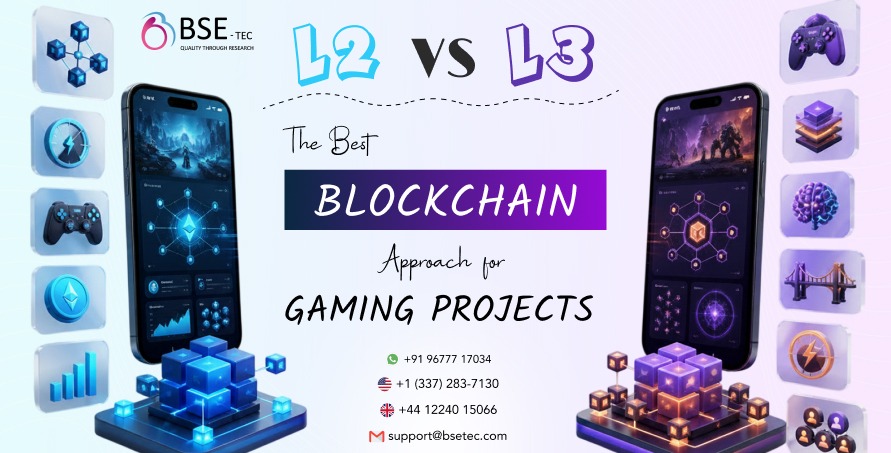
The biggest mistake gaming founders make in 2026 is asking: Should we build on Layer 2(L2) or Layer 3(L3)?
The better question is: What kind of player experience are we trying to create?
Because today’s blockchain gaming market looks completely different from what it was two years ago. Players no longer care about NFTs. They no longer care about tokens. And honestly, they don’t even care which blockchain your game runs on.
They care about one thing: Can they play instantly without friction?
That shift is changing how gaming infrastructure is being designed.
More than 7 million daily gaming wallet interactions are now happening across blockchain gaming ecosystems, proving that Web3 gaming has moved beyond experimentation and into real user adoption. At the same time, gaming-focused chains are processing millions of low-cost transactions every day.
So if you’re planning a gaming project in 2026, the real battle isn’t L2 versus L3.
It’s shared infrastructure versus dedicated infrastructure.
Let’s explore why.
The Gaming Industry Has Entered Its Infrastructure Era
For years, blockchain gaming projects focused on tokenomics. Then they focused on NFTs. Now the focus has shifted again. Today’s successful gaming ecosystems are competing on Transaction speed, Invisible onboarding, Gasless gameplay, Dedicated economies, Seamless asset ownership
Players expect blockchain to work in the background. If every item purchase, battle reward, skin upgrade, or marketplace trade requires visible blockchain interaction, you’ve already lost the player.
This is exactly why Layer 2 adoption exploded after Ethereum’s scaling improvements reduced transaction costs dramatically across rollup ecosystems. L2 networks are now handling millions of daily transactions and have become the foundation for many consumer-facing applications.
However, gaming studios are beginning to discover something important. As games scale, even shared Layer 2 environments start creating limitations.
And that’s where Layer 3 enters the conversation.
Why Many Gaming Studios Still Start on Layer 2
If you’re launching a game today, Layer 2 remains the fastest route to market.
You gain existing liquidity, users. Wallets, marketplaces, developer tooling. Instead of building infrastructure, your team focuses on building gameplay.
This approach works particularly well for:
- Indie Web3 games
- NFT marketplaces
- Casual gaming ecosystems
- Collectible-based games
- Early-stage GameFi projects
The reason is simple. When your game is still validating user demand, you don’t need your own blockchain.
You need players. That’s why some of the largest gaming ecosystems continue leveraging major Layer 2 environments where scalability, security, and user accessibility already exist. But as player numbers increase, a new challenge appears. You start sharing infrastructure with everyone else.
And suddenly, your game’s growth depends on external network activity.
Why 2026 Is Becoming the Year of Gaming Layer 3s
Here’s what many founders are realizing: A successful game behaves differently from a DeFi application.
A game generates Massive microtransactions, Continuous asset movements, Real-time state updates, Event-driven activity spikes, and seasonal traffic explosions
Shared environments are great until everyone starts competing for resources. That’s why the appchain movement is accelerating rapidly.
Layer 3 networks allow gaming projects to launch dedicated chains that inherit security from underlying rollups while maintaining their own execution environment. The result is greater control over fees, throughput, customization, and user experience.
Think about it. Imagine launching a global multiplayer game.
Would you rather: Share infrastructure with hundreds of unrelated applications (or) Control your own gaming-focused ecosystem?
Increasingly, studios are choosing the second option.
The Real Advantage Isn’t Speed. It’s Control.
Most discussions about Layer 3 focus on performance. But performance isn’t the biggest advantage. Control is.
With a gaming-focused Layer 3, developers can customize Fee structures, Asset rules, Economy mechanics, Reward systems, Marketplace behavior, Identity frameworks
In other words: Your infrastructure becomes part of your game design. That’s a massive competitive advantage. And according to industry discussions, dedicated gaming infrastructure is already improving user retention because players experience near-invisible blockchain interactions instead of traditional crypto friction. This is exactly where many future AAA blockchain games are heading.
Not toward bigger Layer 2 ecosystems. Toward specialized gaming chains built specifically for their communities.
The Hidden Trend Most Gaming Founders Are Missing
While everyone debates L2 versus L3, another trend is quietly emerging. Chain abstraction.
Players don’t want to know:
Which chain are they using
Where assets are stored
How bridging works
They simply want ownership to follow them.
The next generation of gaming ecosystems will likely combine Layer 2 scalability, Layer 3 customization, Cross-chain asset portability, and Invisible wallet experiences
The winning games won’t advertise blockchain. They’ll simply deliver better player experiences. And that’s where the industry is heading.
What This Means for Gaming Startups in 2026
If you’re building a new gaming project today, here’s a practical framework:
Start with Layer 2 if:
You’re validating an idea, launching an MVP
You need rapid deployment
You want access to existing ecosystems
Consider Layer 3 if:
You expect large transaction volumes
Need economy-level customization
Want complete control over infrastructure
You’re building a long-term gaming ecosystem
The decision is no longer about blockchain architecture. It’s about business strategy. Infrastructure should match the stage of your product.
Where BSEtec Helps Gaming Companies Make the Right Decision
This is where many gaming founders get stuck. Not because the technology is difficult. But choosing the wrong architecture can become extremely expensive later.
A project that starts on the wrong foundation often faces migration challenges, Performance bottlenecks, rising operational costs, and fragmented player experiences
That’s why at BSEtec, we help gaming companies evaluate the entire blockchain infrastructure journey before development begins.
Instead of asking whether Layer 2 or Layer 3 is better, our team analyzes:
Expected player growth
Transaction patterns
Asset ownership models
Marketplace requirements
Cross-chain ambitions
Long-term scalability goals
Based on these factors, BSEtec designs and develops blockchain gaming ecosystems that align with real business objectives rather than temporary industry trends.
From custom blockchain development and Web3 architecture design to scalable gaming infrastructure and digital asset ecosystems, BSEtec works as a technology partner that helps gaming companies build for where the industry is heading, not where it was yesterday.
Because in 2026, the strongest gaming projects aren’t choosing between Layer 2 and Layer 3.
They’re building ecosystems that can evolve across both.
Final Thoughts
The future of blockchain gaming isn’t Layer 2 or Layer 3, it’s player-first infrastructure.
The most successful gaming projects in 2026 won’t focus on the technology underneath. They’ll focus on delivering seamless experiences where players never have to think about blockchain.
At BSEtec, we help gaming companies choose, build, and scale the right blockchain infrastructure, whether that’s Layer 2, Layer 3, or a combination of both, to create future-ready gaming ecosystems.
Because great Web3 games are built for players first, and blockchain second.