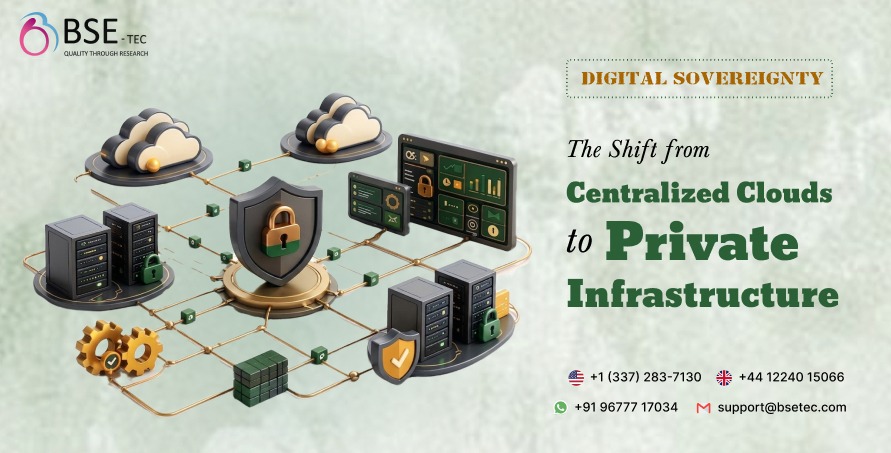
At first, businesses rushed to the cloud for speed; however, they gave up control. Now, rising concerns are pushing a shift toward digital sovereignty—regaining ownership of data and infrastructure.
Understanding Digital Sovereignty
Digital Sovereignty is the shift from being a tenant in someone else’s digital apartment to owning your own home. It is the power to own and control your digital world rather than relying on giant tech companies.
Why it matters
- Data Ownership: You hold the keys to your information instead of renting space from others.
- Privacy: You decide who watches your data, ensuring it isn’t harvested for ads.
- Independence: You aren’t at the mercy of a single provider’s rules or price hikes.
Why It’s Critical Today
The move toward private infrastructure is happening fast for several reasons:
- Security & Geopolitics: Consequently, relying on foreign clouds is now seen as a strategic risk, as any political conflict could instantly cut off access.
- Data Privacy: Furthermore, growing backlash against data harvesting is pushing users to demand better control over their information.
- Cost Control: In addition, hidden cloud fees are rising, making private infrastructure a more predictable long-term investment.
- Legal Compliance: Ultimately, strict data laws now require clear control over data location, making sovereign storage essential.
Why Centralized Clouds Were the Default Choice
The ascendancy of centralized giants (AWS, Azure, GCP) was driven by the Efficiency-to-Complexity ratio.
- Abstraction of Risk: They offered a hands-off approach to hardware failure.
- Elasticity: The ability to scale from 10 to 10,000 users in seconds without physical procurement.
- Ecosystem Gravity: Built-in tools for AI, analytics, and databases made it easier to stay than to leave. Essentially, the world chose convenience over control, treating infrastructure as a utility rather than a strategic asset.
The Cracks Begin to Show
The centralized cloud is fracturing. Initially seen as a perfect solution, several critical flaws have emerged that are forcing businesses to rethink their strategy.
The Structural Failures:
- Privacy Erosion: While providers claim security, they maintain master key access. This makes data vulnerable to metadata mining and unauthorized AI training.
- The Cost Trap: Initially, the cloud is cheap. However, once you scale, egress fees (charges to move your own data) turn the platform into a financial prison.
- Jurisdictional Risk: Since major clouds are tied to specific nations, your data is subject to foreign laws and kill-switch risks during political shifts.
- Systemic Fragility: Because infrastructure is centralized, a single provider outage can paralyze thousands of global businesses simultaneously.
Consequently, the rented model is being replaced by private infrastructure to ensure true ownership and control.
What’s Driving the Shift Now
| Driving Factor | The Impact |
| Regulatory Pressure | Initially, stricter global regulations and data laws are forcing a total overhaul of compliance frameworks. |
| The AI Revolution | Simultaneously, the rise of AI has created a critical need to shield proprietary data from public training sets. |
| Security Risks | Meanwhile, increasing cybersecurity threats are driving the move toward more isolated and hardened data environments. |
| Corporate Autonomy | As a result, businesses are now demanding absolute control and transparency over their digital infrastructure. |
Enter Private Infrastructure
Private infrastructure has emerged as the definitive answer to today’s data challenges. Consequently, organizations are exiting public clouds to build dedicated, sovereign environments.
- Compliance: Meets stricter regulations through localized control.
- AI Security: Protects proprietary data from public exposure.
- Defense: Harden systems against increasing cyber threats.
- Autonomy: Provides the transparency modern businesses demand.
This pivot transforms data from a shared risk into a private, high-value asset.
Not a Replacement, But an Evolution
The shift toward private setups is not a replacement for existing technology, but a strategic evolution of digital architecture. Rather than discarding the cloud entirely, businesses are maturing toward a hybrid model that integrates private, sovereign cores for their most sensitive assets, ensuring that the agility of modern networks is finally paired with the ironclad security required for the AI era.
Furthermore, this transition represents a move from generic, shared utilities to purpose-built, secure vaults that prioritize proprietary data protection. Ultimately, this evolution allows organizations to maintain global connectivity while reclaiming absolute control, transforming their infrastructure from a simple storage space into a strategic, private fortress.
The Role of Emerging Technologies
Emerging technologies are the core engines driving this transition. To begin with, these innovations provide the technical tools necessary to build and maintain absolute data sovereignty.
- On-Device AI: Initially, this allows for local processing, keeping sensitive data off public networks entirely.
- Modular Blockchain: Next, it provides a decentralized foundation for secure, tamper-proof record-keeping.
- Advanced Encryption: Furthermore, tools like Zero-Knowledge Proofs ensure privacy without sacrificing functionality.
These advancements represent a fundamental shift in digital capability. Ultimately, they turn private infrastructure into a high-performance reality for the modern era.
Challenges Along the Way
To begin with, moving to private infrastructure requires a major shift in resources and strategy.
The Obstacles: Initially, high setup costs and the need for skilled talent create barriers; furthermore, integrating with legacy systems adds complexity.
The Solution: Consequently, a phased migration helps maintain stability; next, businesses must manage their own security and maintenance. Ultimately, despite the challenges, this shift ensures true control and data sovereignty.
How BSEtec Helps Businesses Take Back Control
What is BSEtec’s Role?
Initially, BSEtec bridges the gap between public convenience and private control by providing custom-built, enterprise-grade blockchain and private cloud environments. Building on this, their expertise in modular architecture ensures that businesses can deploy specialized App-Chains and decentralized storage that keep sensitive proprietary information off public networks entirely.
How BSEtec Helps You Reclaim Control
Initially, as a leading Blockchain development company, BSEtec acts as the technical architect for this change, replacing black-box clouds with transparent, private-first infrastructure. Building on this, their solutions focus on creating a sovereign environment where your mission-critical operations are shielded from external interference.
- Sovereign Infrastructure Cores: Furthermore, they deploy custom private cloud environments and modular blockchain layers that ensure sensitive data never leaves your controlled network.
- Decentralized Data Ownership: In addition, they utilize peer-to-peer protocols and decentralized storage, eliminating risks of single points of failure or third-party data mining.
- Autonomous AI Workflows: Moreover, by integrating on-device AI, BSEtec allows your organization to run complex, task-oriented agents locally, keeping proprietary intelligence private.
- Modular App-Chain Deployment: Next, they build specialized, high-performance chains tailored to your industry needs, ensuring scalability without sacrificing privacy.
Taking back control is a strategic evolution toward permanent digital independence. Ultimately, BSEtec provides the expertise to transform your business into a self-governing digital fortress, ensuring you own the keys to your future
Looking Ahead: The Future of Digital Ownership
In the near future, creators will no longer let a few giants control data as a commodity; they will own and protect it as an asset. We are moving toward a Plug-and-Play, private infrastructure where even small businesses can run their own servers with ease.
Closing Thought
In today’s digital economy, control is no longer optional; it is the new currency that defines power, security, and long-term success. As businesses move away from dependency and toward ownership, the ability to control data and infrastructure becomes a true competitive advantage.
Ultimately, the future belongs to businesses that own their data, infrastructure, and destiny.